
What is NARS1 Disorder?
NARS1 disorder is an ultra rare condition that affects very few people — we know of about 100 cases worldwide! It happens because of change in a part of our genes called the NARS1 gene.
What Does the NARS1 Gene Do?
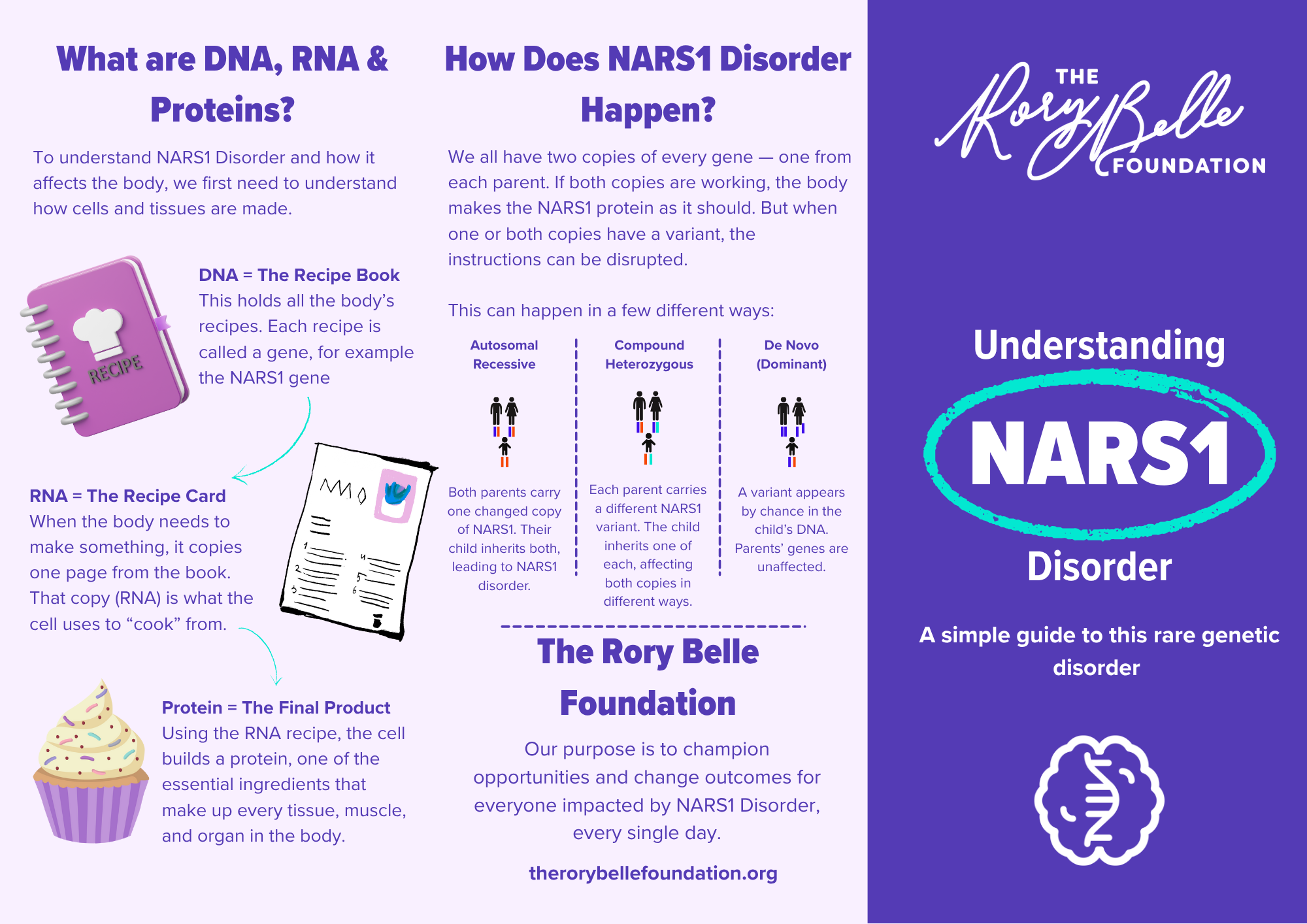
Genes are a bit like recipes. They contain the instructions our bodies need to grow and function.
The NARS1 gene provides the recipe for an enzyme that helps build proteins. Proteins are essential for brain development, movement and everyday cell processes.
When the NARS1 gene isn’t working properly, protein production can be disrupted. This can affect how the brain and nervous system develop, leading to the symptoms seen in NARS1 disorder.
An Introduction to NARS1 Disorder
We know that learning about a rare genetic condition can feel overwhelming, especially in the early days after diagnosis. That’s why we’ve created a simple, family-friendly pamphlet that explains the basics of NARS1 disorder in clear, accessible language.
The guide covers:
How the NARS1 gene works
What changes in the gene can mean
Common symptoms and how they may vary
Answers to frequently asked questions
It’s designed to help families, friends, teachers and healthcare professionals better understand NARS1 and to support important conversations along the way.
What Happens When There is a Variant in NARS1?
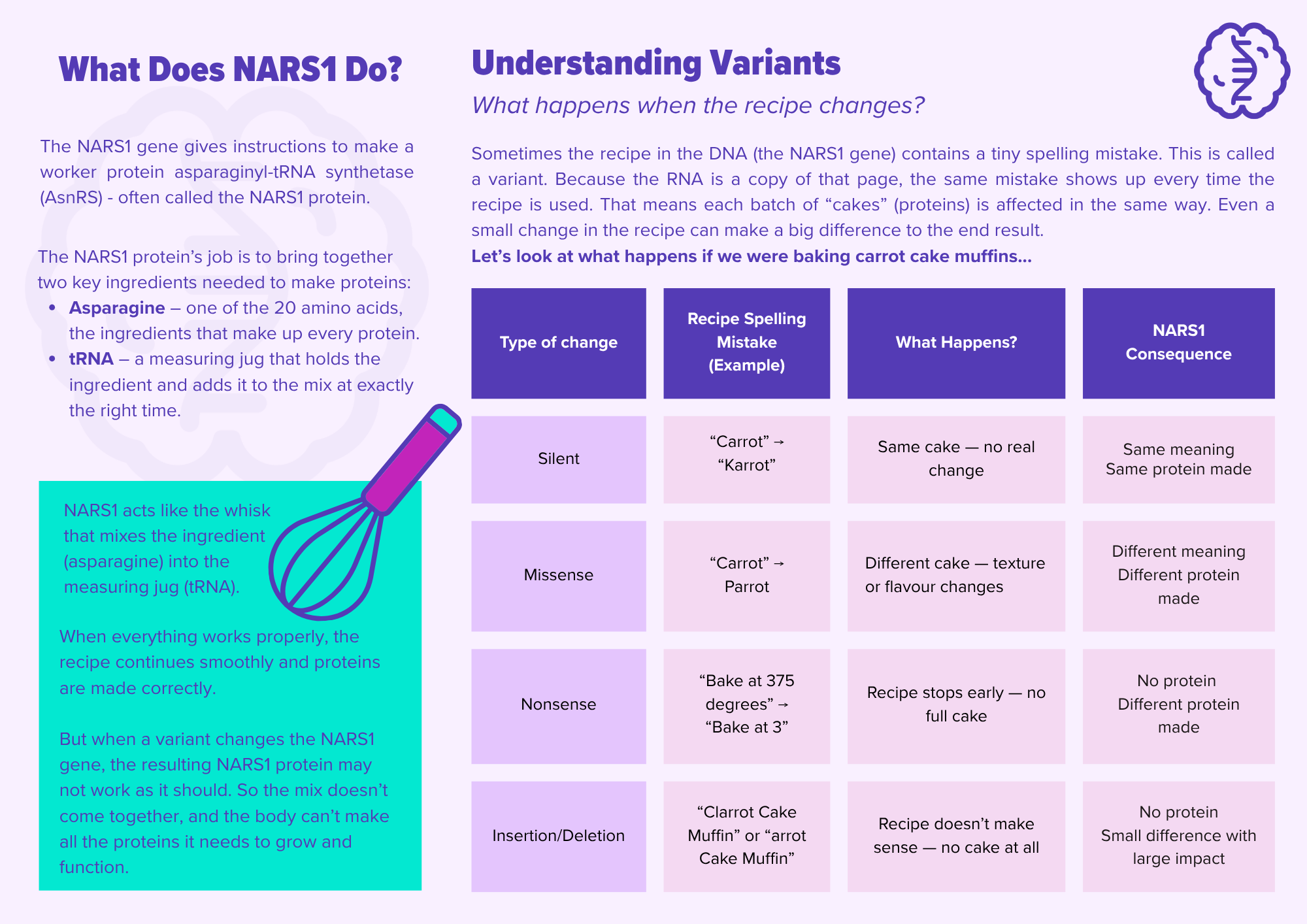
When there’s a change, or mutation, in the NARS1 gene, it can’t do its job properly. This means that our bodies can’t make the right proteins. And proteins are like the workers in our bodies—they help us grow, move, and stay healthy.
Because of this, those with NARS1 disorder can have a variety of challenges, such as:
Smaller Heads: Some children might have smaller heads, a condition called microcephaly.
Long Fingers or Toes: Their fingers or toes might be longer than usual.
Seizures: They may experience different types of seizures, which can affect their brain activity.
Walking Difficulties: Some kids might have trouble walking on their own or may even need help moving around.
Speaking Issues: They might find it hard to talk or may only be able to say a few words.
Eating Problems: Some children may struggle to eat on their own, which can sometimes require a feeding tube.
Muscle Spasms: They may have muscle spasms that can be uncomfortable.
Tingling or Numbness: Kids might feel tingling, numbness, or pain in their arms and legs.
Signs & Symptoms of NARS1 Disorder
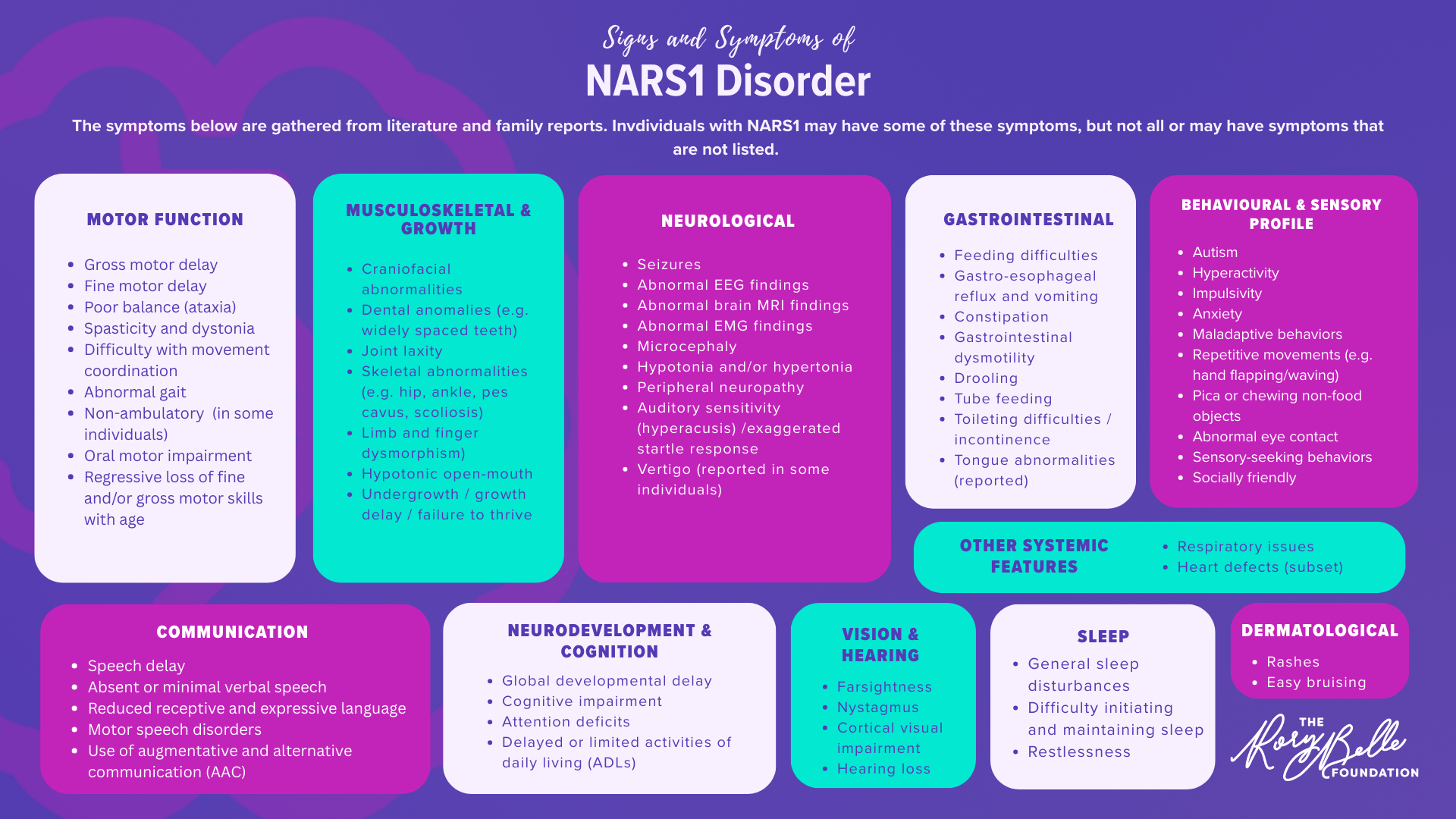
Our understanding of NARS1 disorder is still developing. The information below reflects the symptoms that are currently known to be associated with NARS1, based on clinical experience and the shared knowledge of families and researchers around the world.
Every person with NARS1 is unique. No one will experience all of these symptoms, and the way they present can vary from child to child.
-
Seizures
Abnormal EEG findings
Abnormal brain MRI findings
Abnormal EMG findings
Microcephaly
Hypotonia and/or hypertonia
Peripheral neuropathy
Auditory sensitivity (hyperacusis) /exaggerated startle response
Vertigo (reported in some individuals)
-
Gross motor delay
Fine motor delay
Poor balance (ataxia)
Spasticity and dystonia
Difficulty with movement coordination
Abnormal gait
Non-ambulatory (in some individuals)
Oral motor impairment
Regressive loss of fine and/or gross motor skills with age
-
Craniofacial abnormalities
Dental anomalies (e.g. widely spaced teeth)
Joint laxity
Skeletal abnormalities (e.g. hip, ankle, pes cavus, scoliosis)
Limb and finger dysmorphism)
Hypotonic open-mouth
Undergrowth / growth delay / failure to thrive
-
Feeding difficulties
Gastro-esophageal reflux and vomiting
Constipation
Gastrointestinal dysmotility
Drooling
Tube feeding
Toileting difficulties / incontinence
Tongue abnormalities
-
Autism
Hyperactivity
Impulsivity
Anxiety
Maladaptive behaviors
Repetitive movements (e.g. hand flapping/waving)
Pica or chewing non-food objects
Abnormal eye contact
Sensory-seeking behaviors
Socially friendly
-
Speech delay
Absent or minimal verbal speech
Reduced receptive and expressive language
Motor speech disorders
Use of augmentative and alternative communication (AAC)
-
Global developmental delay
Cognitive impairment
Attention deficits
Delayed or limited activities of daily living (ADLs)
-
Farsightness
Nystagmus
Cortical visual impairment
Hearing loss
-
General sleep disturbances
Difficulty initiating and maintaining sleep
Restlessness
-
Rashes
Easy bruising
-
Respiratory issues
Heart defects (subset)
Countries with at least 1 known case of NARS1 Disorder
Introduction to NARS1 Disorder and Genetic Diseases
This video gives you a clear introduction into NARS1 Disorder and rare genetic disorders.
Learn more about living with NARS1 Disorder directly from our community
This video was created for our 2023 gala fundraiser with the help of our families with NARS1 disorder.
Have you come across the term gene therapy and wondered what it was?
We love the explanation in this video from the American Society of Gene & Cell Therapy!
Gene therapy is a groundbreaking way of treating diseases by fixing problems in our DNA—the instructions that tell our bodies how to work. Imagine if your body had a recipe book and one of the recipes was missing an important ingredient. Gene therapy is like a special delivery service that brings the missing ingredient right where it's needed. For people with rare conditions like NARS1 disorder, this kind of therapy holds incredible promise, offering hope where there once was none. But creating a cure is not simple—it takes years of hard work, teamwork, and a lot of money.