
NARS1 Family Stories - The Lo Re Family, Italy
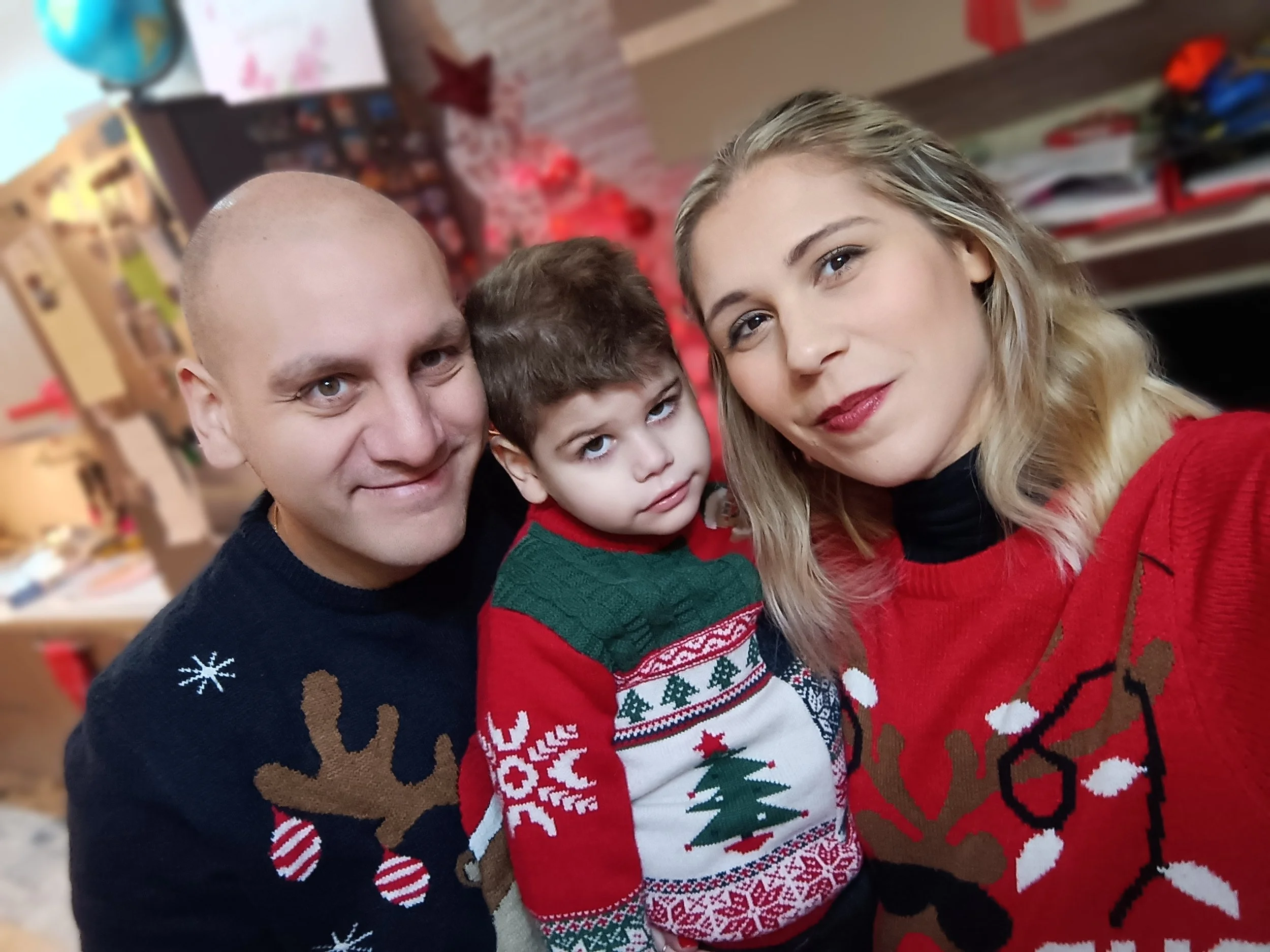
Alessandro and Silvana live in Casalgrande, in the province of Reggio Emilia, with their five-year-old son Gabriel. Their family also includes two much-loved pets: Dom, a German Shepherd, and Leone, a Siamese-type cat. Like many families living with a rare condition, their days are full, busy, and carefully planned around Gabriel’s needs.
“Balancing everything isn’t always easy,” they say. “Between work, therapies and hospital visits, life can feel overwhelming at times. But we don’t give up.”
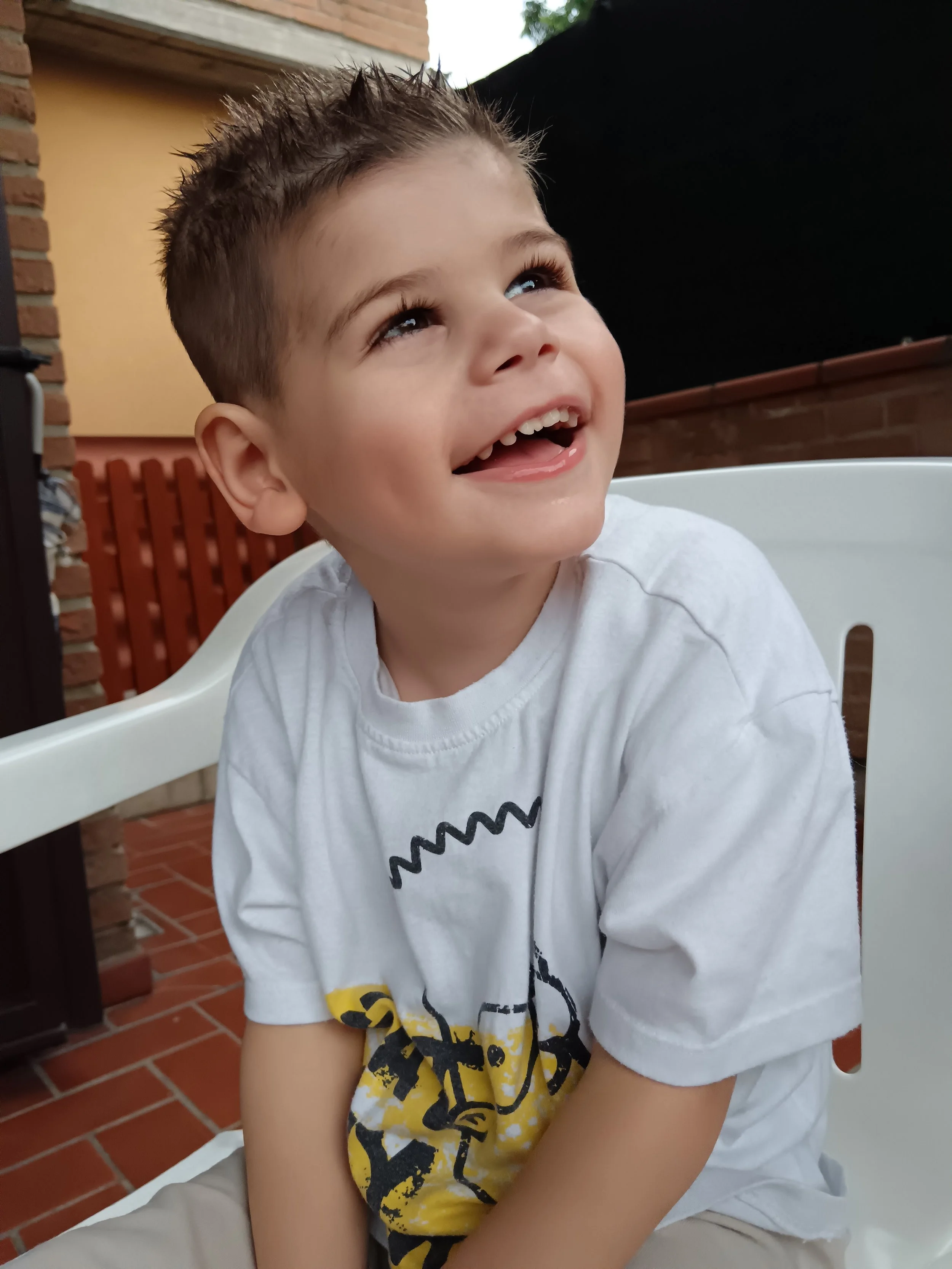
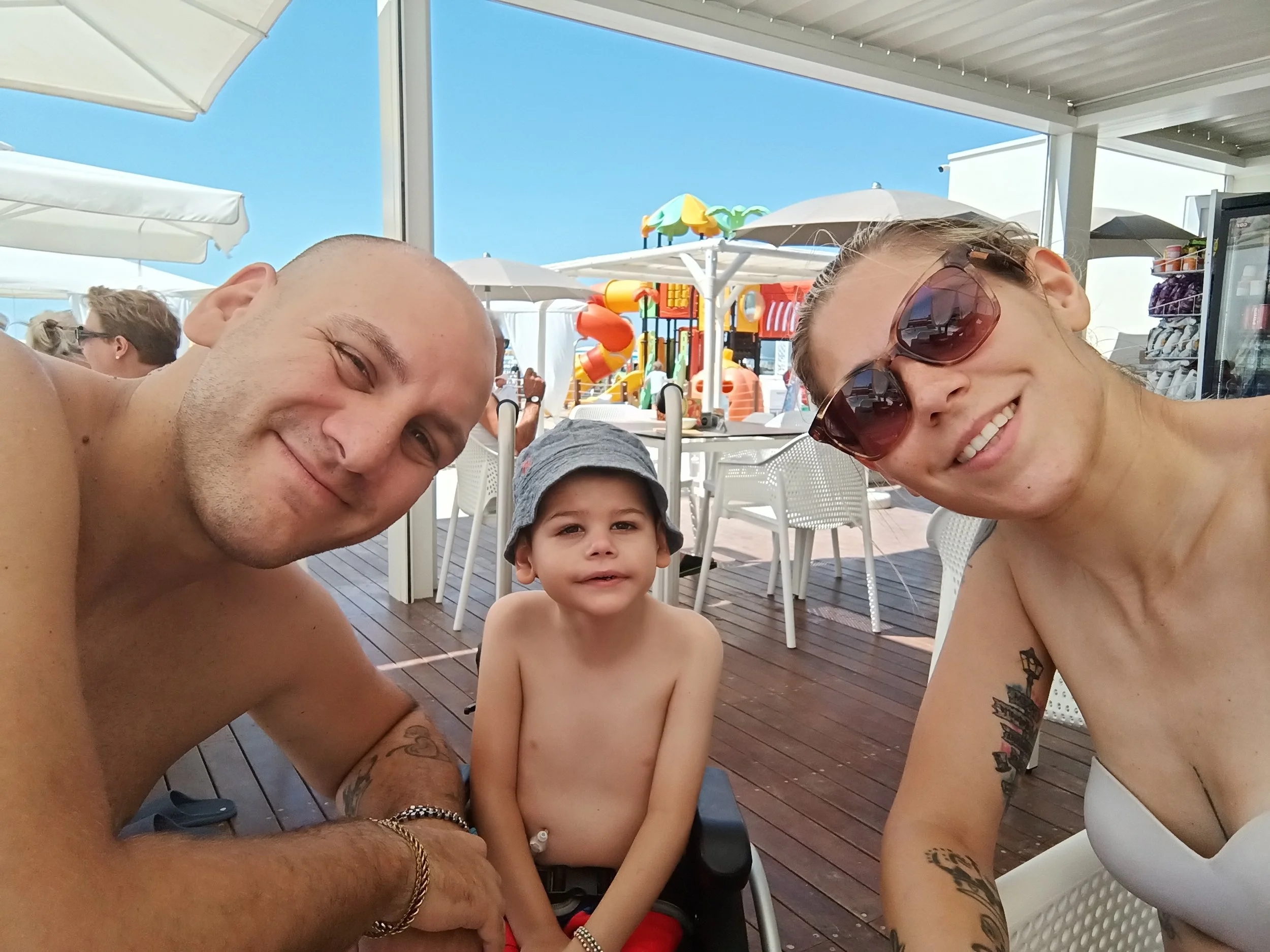
Gabriel is an expressive, lively little boy with a strong personality. He loves the sea and being in the water, laughs endlessly at the funny faces his dad makes, and has a special bond with his grandfather. If his grandad is in the room, no one else exists.
Although Gabriel cannot speak, he communicates clearly in his own way. As those around him often say, he is a little rascal who loves mischief, still puts everything in his mouth, and enjoys throwing anything he can reach.
The Journey to Diagnosis
During pregnancy, doctors identified a Robertsonian translocation involving chromosomes 14 and 21, but this did not appear to cause any problems. From birth, however, feeding was difficult. Gabriel vomited forcefully after almost every feed, and by three months old he was admitted to hospital due to poor weight gain and the fact that his head circumference had not increased.
It was at this point that doctors identified microcephaly and a psychomotor developmental delay. Gabriel began physiotherapy and was followed by neuropsychiatry specialists. Initial genetic testing showed a microduplication of chromosome 22, but as time went on, his symptoms continued to increase and did not fully align with that diagnosis.
Feeding became one of the family’s biggest challenges. Gabriel was diagnosed with severe dysphagia and experienced repeated episodes of aspiration pneumonia. He struggled to keep food down and vomited persistently. Doctors placed a PEG feeding tube, but even this did not improve his condition. Eventually, feeding had to be moved directly into the jejunum using a PEG-J. Gabriel’s case was so rare that it was documented in a medical publication in early 2025.
In May 2023, the family finally received a diagnosis of NARS1 Disorder. Alongside this, Gabriel was also diagnosed with motor and sensory polyneuropathy affecting all four limbs, and he does not walk. Later scans showed brain atrophy, and EEG tests revealed abnormal electrical activity. Although he has not experienced epileptic seizures, he now has frequent absence episodes.
Everyday Life
Like with most NARS1 families, daily life for the Lo Re family is demanding and structured entirely around Gabriel’s care, particularly his feeding. Because he is an active child with a strong desire to move, daytime feeding cannot be delivered continuously via a pump. Instead, Gabriel receives nutrition by syringe every hour throughout the day, alongside regular medication.
At night, once he is asleep, continuous feeding runs until morning.
“Our life is marked by Gabriel’s schedule,” his parents explain.
Bowel management is another ongoing challenge. Gabriel has struggled with intestinal issues since birth and requires supplements to help keep his stools soft. Without sphincter control, frequent nappy changes are part of everyday life, adding to the physical and emotional demands of caring for him.

Finding strength and support
Despite the challenges, Gabriel brings his family immense joy. The moments when he is well, laughing and happy, mean everything to them. His small progress, which might seem insignificant to others, is celebrated deeply at home.
In the hardest moments, what helps most is Gabriel himself. His determination, strength, and desire to live and laugh give his parents the courage to keep going.
Support from others has also made a difference. School has been an important part of Gabriel’s life, helping him learn new skills and providing an environment where he is supported and encouraged. His classmates show him kindness and care, something his parents are deeply grateful for.
Gabriel’s paediatrician has also played a vital role, never dismissing concerns and always listening carefully. “She has never underestimated his condition,” they say, “and she has always helped us find the right solutions.”
More recently, Silvana has connected with two other Italian mothers affected by NARS1. Although they have not yet met in person, sharing experiences and solutions has brought comfort and reassurance. Knowing they are not alone, and that others truly understand, has made a difference.
Looking ahead
Like many families in the NARS1 community, Alessandro and Silvana hope that an effective therapy will one day be found. Until then, their hope is that Gabriel’s condition does not worsen too quickly, and that they will continue to find ways to manage new challenges as they arise, just as they have done so far, even when it has required great effort and many attempts.
If they could share one message with families just beginning this journey, it would be to trust their instincts.
“Only parents truly know their child,” they say. “When facing healthcare systems or bureaucracy, don’t give up. Fight with determination.”
They also want other families to know that there is hope, even in the hardest moments.